
The first AI built for workers’ comp defense.
Enterprise review power, built for workers’ comp defense.
OneAuris reads every page of a production, indexes medical records, flags privilege, and hands your team a prioritized review set. Unlimited matters, users, and documents.
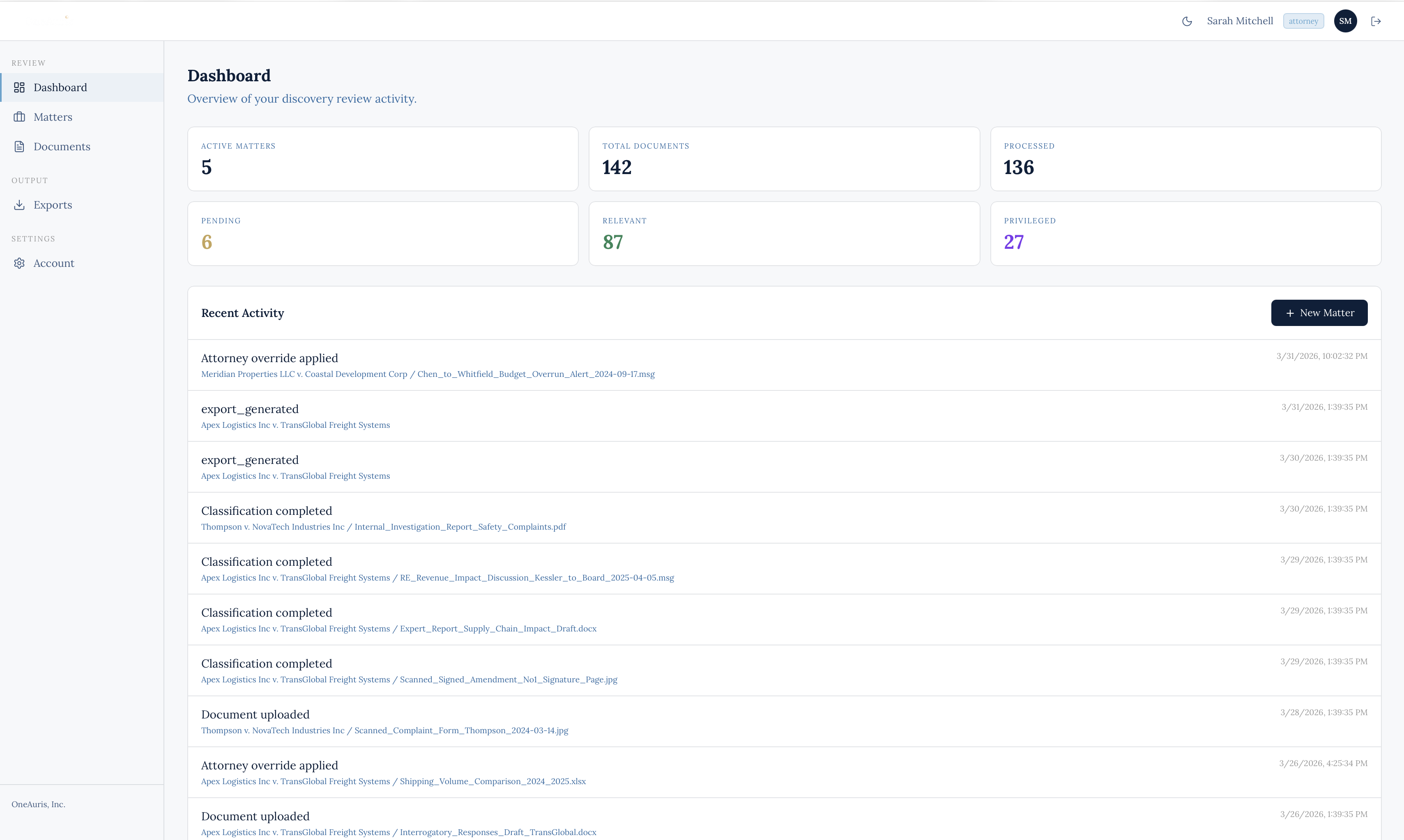
How it works
No training set. No per-document charges.
Brief the matter
Tell OneAuris the parties, custodians, privilege holders, key terms, and date range. About twenty minutes per matter. No training set, no sample documents.
Upload the production
OneAuris reads every page, scores it for relevance, flags privilege, and builds the medical index automatically. Processing runs in the background.
Review in priority order
Your team opens an ordered review set with junk, duplicates, and billing already removed. Every call has the reasoning attached.
Medical indexing, first-pass review, done.
Medical Indexing
Eight hours of indexing, done in minutes.
A stack of medical records becomes a clean index in reverse chronological order. Fax cover sheets, blank pages, duplicates, proofs of service, billing, and claim notes are excluded automatically. You get a final pass before export, and every export writes an audit trail of what went out.

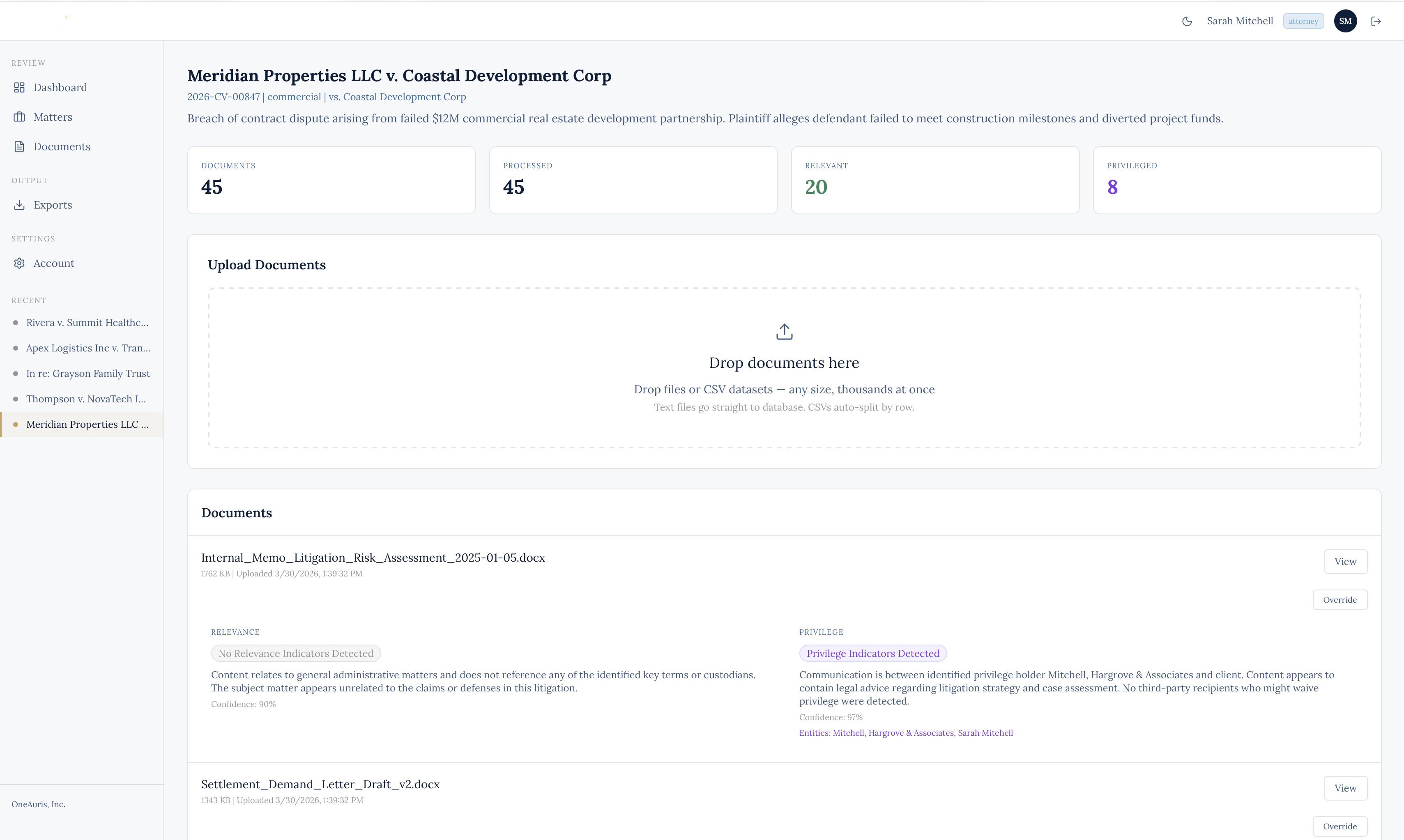
Privilege & Relevance
Every page scored. Every privilege call explained.
OneAuris scores each document for relevance and flags attorney-client privilege, keyed off the attorneys and firms you name at intake. Uncertain pages escalate to a closer analysis pass before an attorney sees the set. The system is tuned for recall: it would rather surface a document you don't need than miss one you do.
Timelines & Facts
Chronology built. Statement drafted.
Dated events are extracted and sequenced into a full case chronology. OneAuris then drafts a statement of facts in paralegal language, each fact cited to its source document and sequenced to your argument. Exports to PDF.
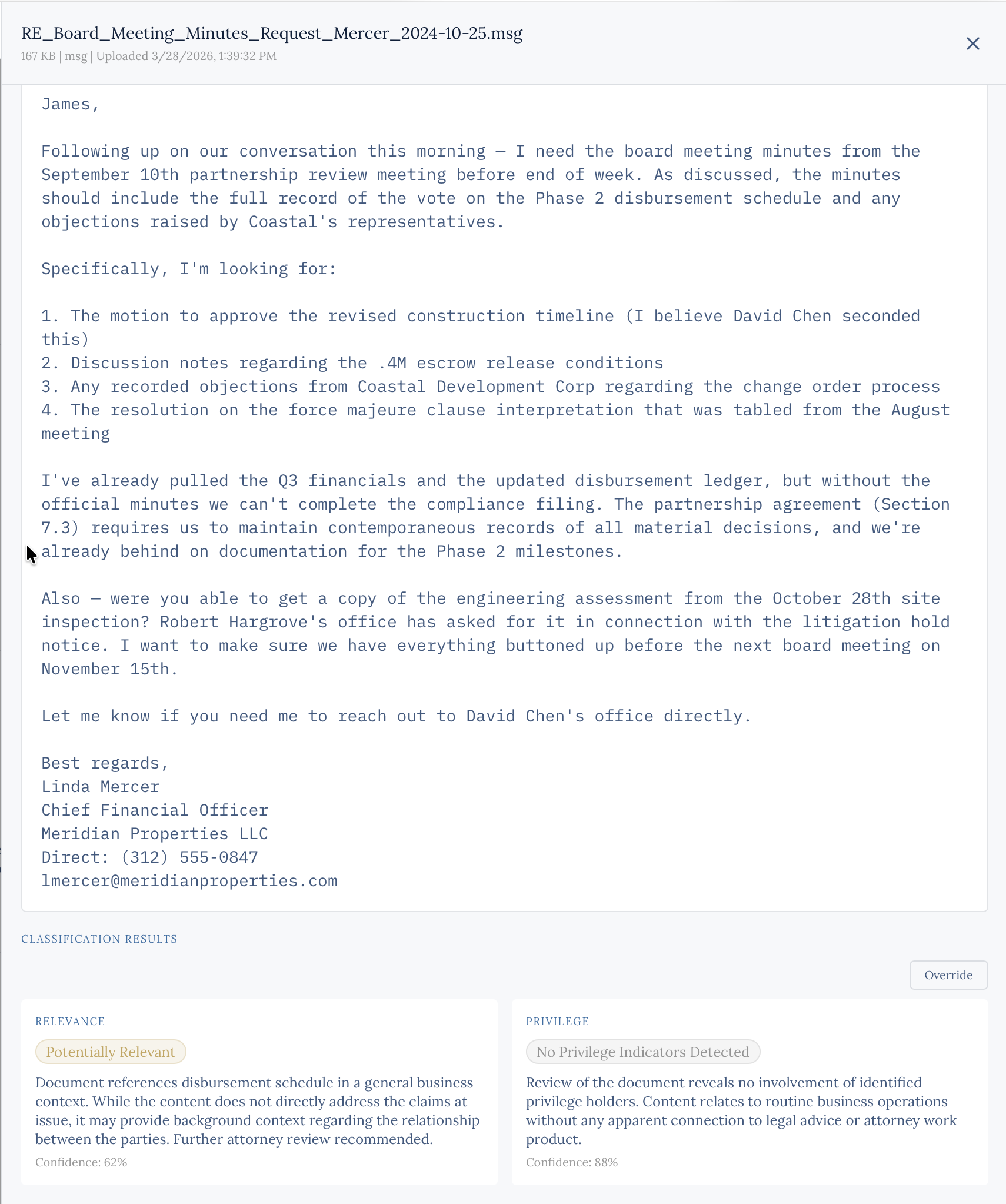
Matter Intake
Brief the case in twenty minutes.
Three steps at intake: parties and custodians, privilege holders and firms, key terms and date range. No training set. No sample documents. Every classification after that is made against your brief.
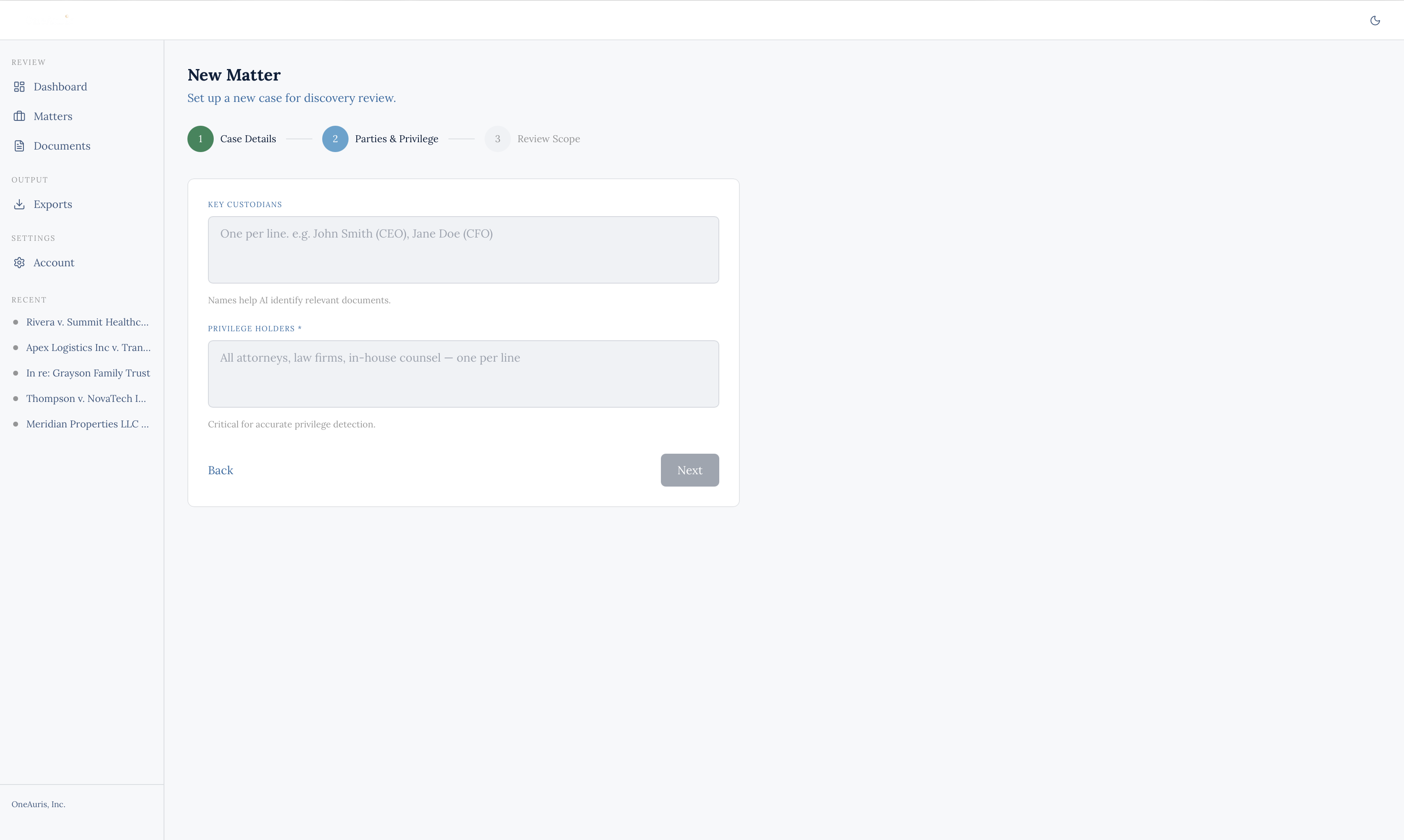
Case Dashboard
Every matter. One screen.
Document counts, review progress, outstanding privilege holds, and export status for every case in the firm. Pick up where the last session left off without hunting through folders or status emails.
Duplicates, timelines, facts, exports.
Upload
Upload up to 100 documents per batch, any file type, up to 1 GB per file. Processing runs in the background with live per-file status from queued through classified.
Personal Injury Defense
Also used by PI defense firms.
Workers’ comp is the core workflow. PI defense firms use the same pipeline (medical record indexing, privilege flagging, and relevance scoring) on personal injury productions.
Built for PHI.
Encrypted in transit and at rest. Zero retention, so nothing is kept or trained on. A BAA is executed before any PHI is uploaded.
FAQ